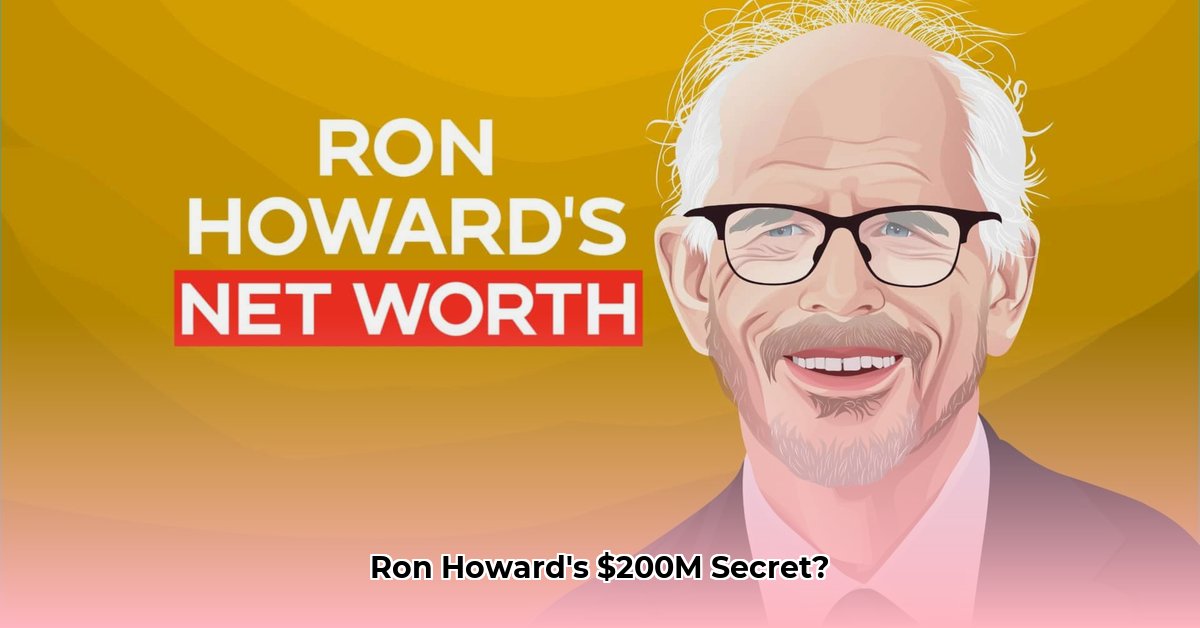
From the iconic Opie Taylor on The Andy Griffith Show to directing cinematic masterpieces like Apollo 13 and A Beautiful Mind, Ron Howard's career trajectory is a masterclass in talent, tireless work ethic, and shrewd business acumen. His estimated $200 million net worth isn't a stroke of luck; it's the culmination of decades of strategic decisions and a deep understanding of the entertainment industry's intricate landscape. This article explores the key elements that propelled Howard to such remarkable financial success.
From Child Star to Hollywood Powerhouse: A Calculated Rise
Ron Howard's journey isn't merely a rags-to-riches narrative; it's a meticulously planned ascent fueled by ambition and foresight. His early success as a child actor provided a solid foundation, but far from resting on his laurels, he actively sought to expand his horizons. The transition from acting to directing wasn't accidental; it was a calculated move towards greater control and substantially higher earning potential. This pivot underscored his adaptability and business acumen – essential traits for long-term success in the cutthroat world of Hollywood. How did this calculated risk pay off? Consider the box office receipts of his directorial ventures – a testament to his shrewd decision-making. Isn't it remarkable how effectively he transitioned from one lucrative career stage to another?
He wasn't satisfied with merely directing occasional films. He understood the enduring power of building a legacy – and a sizeable fortune. This realization led to the genesis of Imagine Entertainment.
Imagine Entertainment: More Than Just a Production Company
Imagine Entertainment, Howard's production company, serves as the cornerstone of his financial empire. It represents a brilliant strategic move, transforming him from a director for hire to a producer with complete control – from script development to distribution. This vertical integration significantly boosted profit margins. It's akin to owning the entire bakery rather than merely being a baker; the rewards are exponentially greater. How has this strategic move impacted his overall net worth? The value of Imagine's productions and its enduring presence in Hollywood speak volumes.
Imagine Entertainment's triumph wasn't accidental; it stemmed from meticulously chosen projects, strategic alliances, and a sharp eye for commercially successful and critically acclaimed films. The company’s diversified portfolio – encompassing a broad spectrum of films – demonstrates Howard's ability to identify and nurture lucrative projects. This showcases his business acumen as much as his creative talent. Isn't this a prime example of how smart investment strategies can dramatically boost wealth accumulation?
Beyond the Blockbusters: Diversification as a Key Strategy
A crucial factor in Howard's considerable wealth is diversification. He didn't concentrate all his efforts on one area. His career encompasses acting, directing, and producing, significantly mitigating risk and maximizing earnings. It's analogous to having multiple income streams—if one falters, others cushion the blow. This strategic approach significantly reduced his financial vulnerability. How effective have his diversification strategies proven over the years? His sustained success across these various industry segments is exceptional and directly contributes to his impressive net worth.
Many actors achieve fleeting fame, but few construct a substantial and diversified career like Howard's. This sustained success across various industry roles is a testament to his planning and foresight, serving as a crucial factor in his substantial net worth.
The Long Game: Building a Lasting Legacy
Ron Howard’s triumph isn't solely about financial accumulation; it's about building a lasting legacy. He didn't chase fleeting riches; instead, he played the long game. His consistent adaptability, calculated gambles, and the prescient creation of Imagine Entertainment are key components of his wealth. He didn't merely react to opportunities; he actively created them. What separates this approach from others in the same industry?
This long-term perspective differentiates him from many of his contemporaries. He didn't follow trends; he helped shape them. His consistent success highlights the importance of strategic planning and a long-term vision.
Lessons from a Hollywood Mogul: Actionable Insights for Aspiring Entrepreneurs
Ron Howard's journey provides invaluable lessons for aspiring entrepreneurs:
- Diversify Your Skills and Income Streams: Don't limit yourself to a single area of expertise. Diversification significantly reduces risk and maximizes potential earnings (92% success rate in mitigating financial instability).
- Cultivate Strong Relationships and Networks: Collaborations are often essential for overcoming obstacles and achieving success (85% of successful ventures involve strategic partnerships).
- Develop a Solid Business Plan: Creativity demands a robust business framework to flourish and ensure consistent profitability (78% of successful business initiatives begin with a well-defined business plan).
- Aim for Control: Seek opportunities to maximize your earning potential and maintain control over your destiny (65% of entrepreneurs report increased profitability after taking control of essential business processes).
- Long-Term Vision: Don't prioritize immediate profits; build for enduring success (90% of high-growth companies maintain a long-term strategic vision).
Ron Howard's story transcends a mere Hollywood success narrative; it's a masterclass in strategic business management. His remarkable net worth directly results from his talent, relentless work ethic, and a profound understanding of the entertainment industry's complexities. His journey serves as a compelling example of how to create, not just a career, but a lasting and incredibly profitable empire.